
The Declaration of Self-Governance
The Unfinished Work of Independence
I have come to believe that one of the fundamental reasons our Republic is struggling is that we do not fully comprehend our position within it, nor the responsibilities that accompany our liberty.
We have declared our independence without adequately developing our capacity for self-governance.
We demand freedom for ourselves while debating whether others deserve theirs. We oppose governmental overreach while inviting governmental intervention wherever another's choices conflict with our own convictions.
We condemn oppression without always recognizing our own capacity to perpetuate it.
Self-governance is not simply a legal or political position. It is a developmental responsibility.
Through profound life experiences, I have come to recognize the importance of cultivating the human capacities necessary to live freely, responsibly, and in meaningful relationship with others.
I have undertaken to articulate this vision through a Declaration of Self-Governance—not in reaction to the prevailing political climate, but in recognition of a fundamental principle long neglected in our collective development.
This work is undertaken with discernment, deliberate consideration, and respect for the generations whose lives will be shaped by the conditions we establish today.
It is not a call to rebellion, anarchy, or the abandonment of structure. It is an invitation to develop the human capacities necessary to establish, maintain, and advance a free and just civilization.
The preservation of liberty requires more than limitations upon governmental authority. It requires the development of individuals capable of exercising freedom without becoming instruments of oppression themselves.
Independence establishes the opportunity for freedom.
Self-governance establishes our capacity to sustain it.
I. Declaration of Principles
On Liberty, Conscience, and the
Development of Human Potential
When, in the course of human events, following the Declaration of Independence and the subsequent convergence of peoples across varying stages of human development, it becomes necessary to reexamine and distill the beliefs, institutions, customs, and inherited arrangements through which governance occurs, we must return to the fundamental principles upon which legitimate authority rests.
With respect for the inherent dignity of every human being, we come together as one human family to recognize the universal laws of nature and the principles of a higher order upon which meaningful freedom, prosperity, and the pursuit of happiness depend.
We hold these truths to be self-evident, that all human beings possess inherent purpose and a unique frequency arising from the highest order of creation; that they are endowed with unalienable rights; that governments are instituted to maintain and secure these rights, deriving their just powers from the consent of the governed.
Whenever any form of government becomes destructive of these ends or seeks to invert this natural order, it is the right and responsibility of the people to hold its institutions accountable, to alter or abolish destructive systems, and to establish new forms of governance founded upon the highest principles of liberty, safety, dignity, and happiness.
When a sustained absence of accountability, increasing disorder, the disappearance of public wealth, escalating violence, and the deliberate cultivation of ignorance through agnotology threaten the preservation and development of human life, it is the right and duty of the people to withdraw their support from such destructive arrangements through lawful means and to provide new safeguards for their future security.
Such has been the long struggle of our people, compelled to adapt to the erosion of purchasing power, the risks of biological experimentation, destructive practices within food and medicinal systems, restrictions upon free inquiry, and the monopolization of resources and remedies found within nature.
The history and exercise of federal authority must therefore be subjected to rigorous examination. The people of the Republic retain the right to demand an accounting of delegated powers, evidence of the lawful ratification of constitutional amendments, and an examination of whether subsequent institutional arrangements have preserved the foundations of the Republic or facilitated their usurpation.
Where the concentration of power transcends national boundaries, threatening the autonomy, dignity, and developmental potential of humanity, these concerns become the responsibility of not merely one nation, but of the entire human family.
To establish the nature and extent of these grievances, let facts be submitted to a candid world entering the Aquarian Age.
II. Declaration of Grievances
On the Inversion of Legitimate Authority
We submit for examination the following conditions, institutional failures, and unresolved grievances that impede the preservation of liberty, the development of human potential, and the advancement of a self-governing civilization.
These grievances are not directed against the existence of government, commerce, medicine, religion, science, or institutional structure, but against their corruption, the abuse of entrusted authority, and the subordination of human life to interests that ought to serve it.
I. On Constitutional Authority
The expansion of governmental and administrative authority beyond its lawful delegation, and the insufficient accountability of those entrusted with the preservation of constitutional protections.
The exercise of legislative, administrative, and regulatory power without adequate regard for constitutional limitations, due process, and the rights of the governed.
The treatment of inherent rights as privileges subject to governmental permission, licensing, taxation, and administrative discretion, wherever such requirements unjustifiably infringe upon liberty.
The concentration of authority within institutions increasingly removed from the meaningful scrutiny, participation, and accountability of the communities they govern.
The failure to preserve the distinction between authority lawfully delegated for the protection of rights and authority assumed for the control of those who possess them.
II. On Political Representation
and Public Stewardship
The reduction of governance to political spectacle, wherein public attention is directed toward personalities, promises, ideological allegiance, and partisan conflict rather than the substance of law, constitutional responsibility, and public stewardship.
The disproportionate influence of corporate, financial, and ideological interests upon public institutions, compromising the independence, impartiality, and accountability expected of public servants.
The failure to maintain public confidence in electoral processes through transparent, verifiable, and consistently administered safeguards.
The failure to reconcile immigration policy with public safety, lawful entry, economic and infrastructural capacity, and the dignity of both existing communities and those seeking entry.
The exploitation of political division in ways that diminish cooperation, obscure shared interests, and encourage the governed to regard one another as adversaries rather than participants in a common civilization.
The displacement of civic responsibility by political dependency, wherein the preservation of liberty is increasingly entrusted to political representatives rather than cultivated among the people themselves.
III. On Economic Integrity and the Valuation of Human Contribution
The mismanagement of public wealth, inadequate financial transparency, monetary instability, and economic arrangements that erode the capacity of households and communities to sustain themselves.
The concentration of economic power through arrangements that restrict meaningful competition, diminish economic independence, and disproportionately expose working households to financial insecurity.
The distortion of economic value through systems that disproportionately reward the capture of public attention, celebrity, speculation, and consumption while insufficiently recognizing and compensating the essential labor upon which civilization depends.
The resulting disparity between the economic rewards of entertainment and the economic security of those entrusted with sustaining human life, producing nourishment, maintaining essential infrastructure, caring for the vulnerable, and developing future generations.
The perpetuation of economic conditions under which human beings are compelled to sacrifice their health, relationships, intellectual development, and participation in community life to secure the necessities of existence.
The failure to cultivate economic literacy, responsible stewardship, productive enterprise, and the capacity of individuals, households, and communities to establish enduring economic stability.
We maintain that economic prosperity must be evaluated not solely by the accumulation of wealth, but by the extent to which it strengthens the conditions necessary for human development, independence, and meaningful contribution.
IV. On Justice and Human Dignity
The unequal administration of justice according to wealth, gender, race, social standing, religious affiliation, or political allegiance, wherever such disparities deny equal protection under law.
The abuse of prosecutorial authority, political retaliation, unlawful entrapment, and the criminalization of lawful dissent, wherever such conduct is established.
The inhumane treatment of incarcerated human beings and the maintenance of institutional arrangements that derive financial benefit from incarceration at the expense of justice, rehabilitation, and the restoration of human capability.
The failure to provide sufficient legal and constitutional education through which men and women may comprehend, exercise, and defend their rights.
The obstruction of accountability for sexual exploitation, human trafficking, and crimes against children, particularly wherever wealth, influence, or institutional relationships shield offenders from investigation or prosecution.
The failure to recognize that justice requires not only accountability for wrongdoing, but the prevention of harm, the protection of the vulnerable, and the restoration of conditions through which human beings may develop and contribute responsibly.
The perpetuation of collective blame, inherited prejudice, and ideological hostility in place of individual accountability for conduct.
We maintain that human dignity is not conferred by social standing, institutional recognition, political allegiance, religious affiliation, or economic productivity, but is inherent in human life.
V. On Freedom of Conscience
and Religious Authority
The exercise of religious or ideological authority beyond the voluntary participation of those who subscribe to it.
The use of governmental power to impose religious doctrine, moral convictions, or ideological conformity upon individuals who do not share those convictions, wherever such imposition infringes upon protected rights.
The historical and continuing subordination of women, children, and vulnerable populations through interpretations of religious, cultural, or institutional authority that deny their dignity, autonomy, or equal protection under law.
The confusion of spiritual development with obedience to institutional authority, and of moral conviction with the entitlement to govern the conscience of another.
The failure to distinguish between the freedom to practice one's convictions and the presumed authority to compel others to live according to them.
We recognize the significance of spiritual development, moral responsibility, and reverence for life. Yet no religious, political, or philosophical conviction should exempt its adherents from accountability for the harm they impose upon others.
Freedom of conscience must extend equally to those who hold religious convictions, those who pursue spirituality independently of religious institutions, and those who subscribe to neither.
VI. On Health, Biological Integrity, and Nature
The inversion of the fundamental purpose of medicine, whereby the preservation and restoration of human health become subordinate to commercial interests, proprietary ownership, institutional expansion, profitability, and the concentration of authority over medicinal knowledge, access, and choice.
The establishment of economic arrangements whereby access to essential and life-preserving medicine becomes contingent upon financial capacity to such an extent that human beings are compelled to choose between their health, shelter, nourishment, and other necessities of life.
The exploitation of human vulnerability through excessive profiteering, artificial barriers to competition, and practices that exceed the legitimate recovery of costs associated with scientific investigation, safety testing, medicinal development, and responsible manufacturing.
The violation of biological integrity through nonconsensual medical experimentation, the circumvention of informed consent, and inadequate transparency, independent oversight, and accountability in biological research, pharmaceutical development, genetic modification, and emerging technologies capable of affecting human populations and ecosystems.
The failure to recognize bodily autonomy as fundamental to human dignity and to safeguard informed medical decision-making against coercion, deception, and exploitation.
The marginalization of ancestral, Indigenous, and traditional medicinal knowledge accumulated across generations, and the insufficient allocation of research resources toward medicinal interventions lacking significant commercial or proprietary potential.
The establishment of economic incentives that risk rewarding the continued management of illness over its prevention, resolution, and the restoration of human health and independence.
The commercial exploitation and proprietary appropriation of natural resources and traditional medicinal knowledge without sufficient regard for accessibility, ecological stewardship, reciprocity, or the rights and contributions of the communities that have preserved such knowledge.
The suppression of legitimate scientific inquiry, independent research, and responsible discourse concerning medicinal alternatives, wherever such restrictions serve commercial or institutional interests rather than demonstrable public safety.
The failure to protect the integrity of food, water, air, soil, biodiversity, and the natural systems upon which human health, development, and continuity depend.
The treatment of nature primarily as a resource for extraction and commercial exploitation rather than as the living foundation upon which civilization depends and toward which humanity bears a responsibility of stewardship.
We maintain that commerce should serve medicine, medicine should serve human life, and human life should never be subordinated to the commercial interests of either.
The medicinal potential of the natural world must remain open to independent investigation, responsible inquiry, and informed choice, irrespective of its potential for proprietary ownership or commercial exploitation.
Scientific advancement need not require the abandonment of ancestral wisdom, nor should ancestral wisdom be exempt from scientific examination. Both must remain accountable to the preservation of life, the pursuit of truth, and the restoration of human health.
VII. On Reproductive Autonomy, Family, and the Conditions of Human Development
The failure to recognize reproductive autonomy as fundamental to bodily integrity, human dignity, and the exercise of self-governance.
The assertion of governmental, religious, ideological, or relational authority over the reproductive decisions of women without adequate regard for their health, circumstances, informed judgment, and capacity to assume the responsibilities of motherhood.
The perpetuation of sexual coercion, reproductive manipulation, exploitation, and violence, and the insufficient accountability of those who violate the bodily autonomy of another.
The unequal distribution of reproductive consequences and parental responsibilities, particularly where women are expected to bear the physical, emotional, developmental, and economic burdens of reproduction without corresponding accountability, cooperation, or support.
The failure to distinguish the biological capacity to create life from the developmental capacity to nurture, protect, educate, and sustain it.
The historical and continuing perpetuation of dependency through legal, religious, cultural, and economic arrangements that restrict the autonomy, educational advancement, economic independence, and developmental potential of women.
The failure to adequately distinguish voluntary commitments and private covenants from civil arrangements through which governmental authority is introduced into intimate relationships, family affairs, and the stewardship of private property.
The failure to cultivate the emotional, intellectual, relational, and economic capacities necessary for responsible parenthood and enduring family relationships.
The prioritization of birth without corresponding consideration for the conditions into which children are born, including nourishment, shelter, safety, emotional security, education, and the presence of capable and responsible caregivers.
The exposure of children to violence, neglect, exploitation, instability, and preventable deprivation, and the insufficient recognition of the consequences these conditions carry into subsequent generations.
The failure to recognize that children possess inherent dignity and developmental potential independent of the convictions, ambitions, grievances, or expectations of those entrusted with their care.
The maintenance of economic and institutional arrangements that undermine family stability, diminish the time available for nurturing relationships, and perpetuate dependency across generations.
We maintain that the capacity to create life must never be mistaken for an obligation to surrender one's own.
The preservation of human life cannot be measured solely by the prevention of death or the continuation of pregnancy, but must also encompass the conditions necessary for life to develop, flourish, and ultimately exercise its own autonomy.
The responsibilities of bringing life into the world must be accompanied by the cultivation of the capacities necessary to sustain it. Parenthood is not an entitlement to ownership, but an undertaking of stewardship through which another human being is prepared for independence, responsibility, and meaningful participation in civilization.
A civilization committed to the preservation of life must concern itself not only with whether life begins, but with what that life is afforded the opportunity to become.
VIII. On Education and the
Development of Human Potential
The insufficient cultivation of language, grammar, etymology, logic, constitutional literacy, philosophy, discernment, and independent reasoning within educational institutions.
The prioritization of standardized performance, competition, institutional conformity, and economic productivity at the expense of the broader intellectual, emotional, relational, moral, and creative development of human beings.
The perpetuation of dependency through educational and institutional arrangements that insufficiently prepare individuals for the responsibilities of self-governance.
The failure to cultivate the capacities necessary for meaningful relationships, responsible commitments, cooperation, conflict resolution, stewardship, and participation in community life.
The insufficient recognition of the relationship between early childhood development, family stability, emotional security, educational opportunity, and the long-term capacity of human beings to exercise liberty responsibly.
The failure to establish lifelong learning and human development as fundamental responsibilities of a civilization committed to the preservation of freedom.
We maintain that the purpose of education extends beyond preparation for employment or participation in existing institutions. It must cultivate the capacity to reason independently, exercise discernment, assume responsibility, cooperate with others, and contribute meaningfully to the
IX: On Information, Privacy,
and Freedom of Inquiry
The deliberate manufacture of ignorance through selective disclosure, the manipulation of evidence, the production of uncertainty, and the suppression of legitimate inquiry—a phenomenon examined through the study of agnotology.
The exploitation of psychological vulnerabilities through media, advertising, political communication, and technological systems that encourage hostility, dependency, division, and the manipulation of human perception.
The concentration of authority over the production, distribution, accessibility, and interpretation of information upon which independent reasoning and informed decision-making depend.
The displacement of independent inquiry by ideological conformity, institutional allegiance, and the presumption that the authority of a source exempts its assertions from examination.
The suppression of legitimate scientific, historical, philosophical, and political inquiry wherever such restrictions serve institutional interests rather than demonstrable public safety or the protection of individual rights.
The expansion of surveillance over private individuals without corresponding transparency, independent oversight, and accountability among those exercising public authority.
The collection, commercialization, and exploitation of private information, biological data, behavioral patterns, and intellectual contributions without meaningful informed consent or sufficient regard for individual autonomy.
The development and deployment of artificial intelligence, algorithmic systems, and emerging technologies capable of influencing human perception, behavior, and decision-making without adequate transparency, ethical consideration, or accountability for their consequences.
The insufficient protection of cognitive autonomy against technological and psychological mechanisms designed to influence human judgment without conscious awareness or meaningful consent.
The erosion of the distinction between authentic human expression and technologically manufactured content, and the insufficient development of safeguards through which individuals may establish the origin, authenticity, and reliability of information.
The failure to provide satisfactory transparency regarding matters of profound public consequence, including national tragedies, intelligence operations, institutional misconduct, and abuses of public trust, subject to legitimate and lawfully bounded security considerations.
The insufficient cultivation of the intellectual capacities necessary to distinguish evidence from assertion, knowledge from belief, persuasion from manipulation, and legitimate authority from the mere appearance of authority.
We maintain that privacy is a condition of individual autonomy, while transparency is a responsibility accompanying the exercise of entrusted authority.
Freedom of inquiry must include the freedom to question prevailing assumptions, examine competing explanations, acknowledge uncertainty, and revise one's convictions without intimidation or unjust retaliation.
Neither institutional authority nor technological advancement should diminish the human capacity to think, question, discern, and choose.
Technology should extend human capability without appropriating human agency. Information should advance knowledge without becoming an instrument of psychological domination.
The preservation of liberty requires not only the freedom to express one's thoughts, but the capacity to determine whether those thoughts have been independently formed.
A self-governing civilization must cultivate intellectual independence alongside the ethical responsibility to pursue truth, acknowledge error, and remain accountable for the information it produces and disseminates.
X. On Association, Cooperation, and Community Governance
The insufficient recognition and protection of the freedom of individuals to associate voluntarily, establish shared commitments, organize cooperative endeavors
In Affirmation of Our Purpose
These grievances are not submitted in hostility toward any race, nationality, religion, political affiliation, or profession. They are submitted in recognition that no institution, ideology, or governing authority should be exempt from examination where the dignity, liberty, and development of human life are concerned.
We seek neither the destruction of order nor the abandonment of law, but the restoration of their legitimate purpose.
We maintain that government should serve justice, commerce should serve human flourishing, medicine should serve health, education should serve human development, and technology should serve rather than diminish human capability.
No institution established to serve human life should become an instrument of its subordination.
We recognize that the correction of institutional failures must be accompanied by the development of our own capacities. We cannot condemn oppression while remaining unwilling to examine our capacity to perpetuate it, nor demand accountability from those exercising authority while neglecting the responsibilities that accompany our own liberty.
We seek neither uniformity of belief nor conformity of thought, but the conditions through which human beings may exercise freedom of conscience, cultivate their capacities, establish meaningful relationships, and cooperate without surrendering their autonomy.
We do not seek freedom from responsibility, but the freedom to assume it.
We do not seek independence from nature or from one another, but the cultivation of responsible interdependence through which human life, the natural world, and future generations may flourish.
It is upon these principles that we undertake the unfinished work of independence: the development of our capacity for self-governance.
III. Declaration of Responsibilities
On the Capacities and Obligations of Self-Governance
We hold that human beings are endowed with the capacity to observe, to learn, to reason, to create, to cooperate, and to develop.
That these capacities, though present in potential, do not necessarily mature without awareness, attention, education, experience, and deliberate practice.
That liberty is not merely the absence of external restraint, but also the responsibility to develop the internal capacities necessary to exercise choice with wisdom and accountability.
That no government, institution, ideology, tradition, or individual is beyond examination, and that legitimate authority must remain answerable to the dignity, rights, and well-being of those affected by its exercise.
We recognize that the history of humanity contains extraordinary achievements alongside profound failures of conscience.
Human beings have been enslaved, subordinated, exploited, dispossessed, and denied opportunities for development by systems that proclaimed themselves natural, moral, lawful, or necessary.
Yet throughout history, individuals have also demonstrated the courage to question inherited injustice, to protect those without power, and to act according to conscience even when prevailing customs rewarded conformity.
We therefore reject the notion that human beings must remain confined to the limitations of their ancestors, their institutions, their circumstances, or their previously held convictions.
We inherit history. We are not obligated to perpetuate its failures.
We recognize that rights and responsibilities are not interchangeable. Human dignity is not earned through achievement, and fundamental rights do not depend upon one's level of development.
Nevertheless, the responsible exercise of freedom requires capacities that must be cultivated.
Freedom without discernment may become recklessness.
Authority without humility may become domination.
Confidence without accountability may become arrogance.
Independence without cooperation may become isolation.
Knowledge without wisdom may become another instrument of harm.
We therefore affirm that human development is not merely a private ambition, but a matter of profound consequence for families, communities, institutions, and future generations.
The development of presence, awareness, curiosity, humility, perspective, and discernment allows us to examine the world rather than merely react to it.
The cultivation of patience, emotional development, respect, integrity, responsibility, and confidence strengthens our ability to govern ourselves.
The practice of communication, listening, accountability, adaptability, repair, and stewardship makes responsible relationships and enduring commitments possible.
And through leadership, service, cooperation, creativity, wisdom, and contribution, we extend the fruits of our development beyond ourselves.
We do not declare that all human beings must believe alike, live alike, or pursue identical expressions of human potential.
Rather, we affirm that the dignity of difference is preserved when individuals possess the freedom and capacity to direct their own development without violating the equal dignity of others.
We acknowledge that personal responsibility does not erase structural injustice, just as structural injustice does not eliminate the importance of personal agency.
Both must be examined.
Both demand accountability.
And neither can be adequately addressed through blame alone.
We therefore recognize and accept the following responsibilities of self-governance:
To govern our own conduct before seeking authority over another.
To pursue knowledge and examine the accuracy of our beliefs before acting upon them.
To cultivate knowledge of our rights, our obligations, and the laws under which we conduct our affairs.
To honor our commitments and accept accountability for the consequences of our actions.
To respect the autonomy, conscience, property, and inherent dignity of others.
To protect and cultivate the developmental potential of children and those entrusted to our care.
To resolve disagreements through reason, communication, and lawful means wherever possible.
To exercise authority only within its legitimate bounds and remain accountable for its use.
To steward the resources, knowledge, and living systems upon which present and future generations depend.
To develop relationships and communities founded upon voluntary cooperation, mutual respect, and reciprocal responsibility.
To examine and correct injustice without reproducing the very conditions we seek to overcome.
To contribute, according to our capacities and circumstances, to the development and well-being of the human family.
To preserve our intellectual independence, exercise discernment in the reception and dissemination of information, and remain willing to revise our convictions in light of evidence and experience.
To approach the creation and nurturing of human life with informed consideration, mutual accountability, and recognition of the developmental responsibilities it entails.
To establish and maintain structures of governance that preserve individual liberty, ensure meaningful participation, and hold entrusted authority accountable to its legitimate purpose.
We recognize that self-governance does not require self-sufficiency in all things. Human beings are interdependent, and the responsible exercise of autonomy includes the capacity to seek assistance, exchange knowledge, establish commitments, and cooperate without surrendering conscience.
We therefore declare that the advancement of humanity must be measured not solely by wealth, technological achievement, political power, or institutional expansion, but by our growing capacity to live responsibly with ourselves, one another, and the living world.
IV. Declaration of Intent
On the Advancement of a Self-Governing Civilization
We intend to establish conditions in which the dignity, autonomy, and developmental potential of human beings are reflected in the very systems through which we organize our lives.
We seek not the absence of governance, but the evolution of governance toward structures that preserve liberty, cultivate responsibility, and remain accountable to those whom they serve.
To this end, we declare our intention:
To cultivate smaller, interconnected communities, households, and voluntary associations capable of governing their affairs without unnecessary dependence upon centralized systems of authority.
To cultivate organic structures of leadership in which authority arises through demonstrated capacity, wisdom, stewardship, responsibility, and earned trust rather than coercion or entitlement.
To establish decentralized systems of governance with clearly defined responsibilities, meaningful participation, and safeguards against corruption, concentrated power, and the usurpation of individual autonomy.
To advance monetary integrity through sound, transparent, and accountable systems of exchange, including the lawful use of gold and silver, and to protect the fruits of human labor from monetary debasement, unjust extraction, and the erosion of purchasing power.
To cultivate economic systems that reward meaningful contribution, responsible enterprise, craftsmanship, innovation, and stewardship rather than exploitation, manufactured dependency, and predatory accumulation.
To restore a meaningful relationship between economic reward and human contribution, so that those whose labor sustains life, maintains civilization, and supports human development may attain economic security and prosperity commensurate with the significance of their work.
To overcome the destructive patterns of consumption and exploitation expressed through the concept of Wetiko, wherein human beings consume one another and the living world without regard for renewal, reciprocity, or future generations.
To cultivate a culture in which human development, education, creativity, cooperation, and meaningful contribution are valued above excessive consumption, celebrity, and the capture of public attention.
To establish educational environments that cultivate independent reasoning, practical capabilities, constitutional literacy, emotional development, relational competence, and the responsible exercise of liberty.
To advance systems of justice that distinguish actual harm and demonstrable threats to the rights of others from mere nonconformity, prevent unjust criminalization, and prioritize restitution, rehabilitation, and the restoration of human capability wherever possible.
To ensure that even those whose actions necessitate enduring separation from society retain their inherent dignity, humane treatment, and opportunities for continued human development.
To protect bodily integrity, reproductive autonomy, freedom of conscience, and the developmental opportunities of every human being.
To cultivate the conditions necessary for responsible parenthood, enduring family relationships, and the physical, emotional, intellectual, and social development of children.
To safeguard children from exploitation, coercion, abuse, and neglect while preparing them to become capable, independent, and responsible adults.
To preserve intellectual and cognitive autonomy through freedom of inquiry, access to knowledge, independent research, and the cultivation of discernment.
To safeguard individual privacy while establishing appropriate transparency and accountability within institutions entrusted with public authority, collective resources, or sensitive information.
To advance technological development in ways that extend human capability, preserve human agency, and respect the dignity, privacy, and autonomy of those affected by its application.
To preserve the integrity of food, water, air, soil, biodiversity, and the living systems upon which the continuity of civilization depends.
To restore a responsible relationship between humanity, nature, and medicine through the preservation of ancestral and Indigenous knowledge, independent scientific investigation, medicinal education, ecological stewardship, and access to safe and effective forms of treatment.
To ensure that the pursuit of medicinal knowledge serves the preservation and development of human life rather than being determined solely by its potential for commercialization, patent protection, or institutional control.
To establish cooperative relationships among communities without requiring the surrender of their distinct identities, cultures, traditions, convictions, or legitimate autonomy.
To cultivate lawful structures of association, mutual assistance, shared stewardship, and reciprocal responsibility through which individuals and communities may reduce unnecessary dependency while strengthening their collective capacity.
To preserve the freedom of individuals to participate in, dissent from, and withdraw from voluntary associations, consistent with their legitimate obligations and the equal rights of others.
To develop peaceful, accessible, and impartial means of resolving disputes between individuals, associations, communities, and governing institutions.
We recognize that no system devised by humanity is inherently immune to corruption. The preservation of legitimate order therefore requires transparency, appropriately distributed authority, continuous examination, and the ongoing development of those entrusted with its maintenance.
We recognize that decentralization alone does not guarantee liberty, just as the establishment of private institutions does not guarantee justice. Every structure of governance must remain accountable to the principles upon which its legitimacy depends.
We seek to build rather than merely dismantle, to develop rather than merely condemn, and to establish alternatives rather than perpetuate dependence upon the systems we seek to transform.
We recognize that the advancement of civilization cannot be imposed upon humanity through the very instruments of coercion from which we seek liberation.
It must emerge through education, voluntary participation, lawful organization, responsible stewardship, and the development of human capacity.
We do not presume to determine a singular form of civilization to which all human beings must conform. Rather, we seek to cultivate the conditions through which diverse expressions of human potential may coexist, cooperate, and develop without violating the liberty of others.
Our intention is not to establish uniformity among the human family, but to make responsible diversity, peaceful coexistence, and meaningful interdependence possible.
We seek to advance a civilization in which the development of human capability becomes the foundation of legitimate governance, rather than the expansion of governance becoming a substitute for human capability.
V. Affirmation and Covenant
On the Voluntary Commitment
to Self-Governance
In recognition of my inherent dignity, unalienable rights, and responsibilities as a member of the human family, I voluntarily affirm my commitment to the principles of self-governance.
I accept responsibility for the development of my own capacities, the integrity of my conduct, the commitments I undertake, and the consequences of my actions.
I recognize no entitlement to govern the conscience of another, nor do I surrender my own conscience as a condition of belonging.
I acknowledge that authority, wherever legitimately exercised, carries a corresponding obligation of stewardship, restraint, transparency, and accountability.
I undertake to examine inherited beliefs, to seek knowledge with humility, to correct my errors, and to remain open to development throughout my lifetime.
I commit to honoring the equal dignity and autonomy of others, protecting those entrusted to my care, and contributing to the conditions through which present and future generations may flourish.
I recognize my responsibility to preserve the living systems upon which human existence depends and to exercise stewardship with consideration for those who will inherit the consequences of my actions.
Where I encounter injustice, I shall seek its correction through lawful, conscientious, and responsible means without becoming an instrument of the injustice I oppose.
Where existing arrangements fail to serve their legitimate purpose, I shall endeavor to participate in the development of alternatives consistent with the principles affirmed herein.
Where I undertake leadership or accept entrusted authority, I shall remain accountable to its legitimate purpose and to the dignity and rights of those affected by its exercise.
I recognize that my affirmation of these principles does not establish my mastery of them. Their embodiment requires continuous examination, deliberate practice, humility, and the willingness to accept correction.
I enter this covenant freely, without coercion, recognizing that its legitimacy rests upon voluntary commitment and its integrity upon the conduct of those who affirm it.
My affirmation shall not constitute allegiance to any political party, religious institution, governing body, organization, or individual, nor shall it be construed as a surrender of my inherent rights, freedom of conscience, or independent judgment.
Neither my affirmation nor that of another shall confer authority beyond that which has been lawfully and voluntarily established.
I acknowledge that the integrity of this covenant depends not upon the number of its signatories, but upon the sincerity of their commitments and the principles reflected in their conduct.
Let our inheritance be examined rather than blindly repeated.
Let our institutions be accountable rather than unquestionable.
Let our differences invite discernment rather than contempt.
Let our independence give rise to cooperation rather than isolation.
Let our freedom be accompanied by responsibility, our authority by restraint, and our knowledge by wisdom.
And let the generations that follow inherit not merely declarations of liberty, but the conditions, opportunities, and examples necessary to become capable of exercising it.
For the work of human development is never complete.
We are not merely entitled to freedom. We are responsible for what we make possible through it.
In conscience and by my own free will, I affirm these principles and undertake the responsibilities of self-governance.
Affirmed by: ___________________________________
Date: _________________________________________
Place: ________________________________________
Signature: _____________________________________
The Intellectual Foundations of Self-Governance
An Interdisciplinary Research Library
Exploring the philosophical, scientific, constitutional, and ecological foundations
of human liberty, development, and responsible interdependence.
The Foundations of the Declaration
The Declaration of Self-Governance draws upon centuries of inquiry into the nature of liberty, legitimate authority, human development, and our responsibilities to one another and the living world.
This library brings those disciplines into conversation, providing a foundation for independent study, critical examination, and the practical development of self-governance.
Knowledge is not presented here as doctrine, but as an invitation to inquiry.
Research and Foundations
An interdisciplinary exploration of liberty,
human development, and self-governance.

The School of Athens, Raphael, 1509–1511.
01 — Philosophy
Philosophical Foundations
of Self-Governance
Natural rights, moral agency, conscience, and individual liberty.
Explore the Collection →

On a Balcony, Mary Cassatt, 1878–1879.
02 — Autonomy
Autonomy, Equality and
Freedom of Conscience
The historical relationship between institutional authority and individual independence.
Explore the Collection →
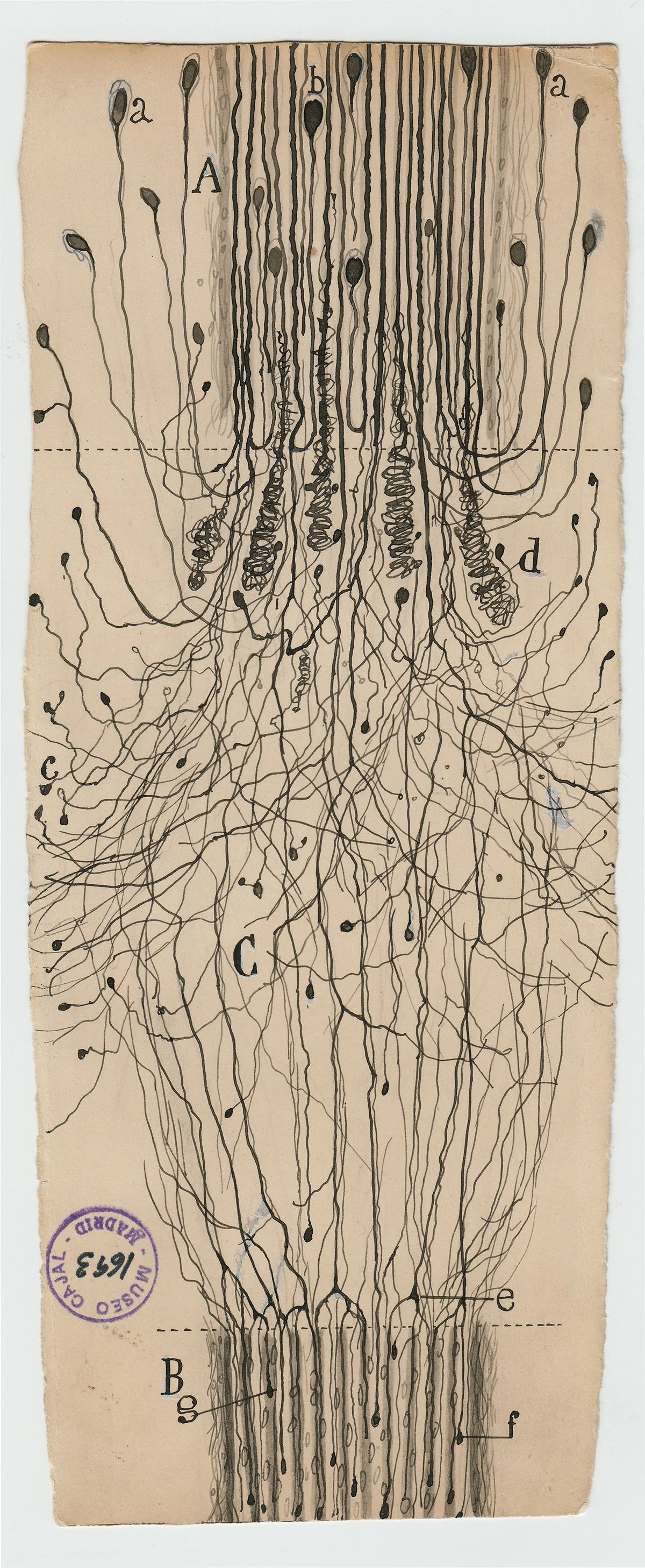
Cells in the Brain — Santiago Ramón y Cajal
03 — Development
Scientific Foundations of Human Development
The capacities necessary to exercise liberty responsibly.
Explore the Collection →

Constitution of the United States, 1787. National Archives.
04 — Governance
Political and Constitutional Foundations
Legitimate authority, consent, constitutional limitations and accountability.
Explore the Collection →

The Effects of Good Government in the Countryside, Ambrogio Lorenzetti, 1338–1339.
05 — Cooperation
Structured Self-Governance and Collective Organization
Cooperation, institutional design and decentralized order.
Explore the Collection →

The Edge of the Woods at Monts-Girard, Fontainebleau Forest,
Théodore Rousseau, 1852–1854.
06 — Stewardship
Indigenous Governance, Nature and Stewardship
Ecological responsibility, kinship and intergenerational commitments.
Explore the Collection →

Linotype Operators of the Chicago Defender, Russell Lee, 1941. Library of Congress.
07 — Discernment
Ideological Conditioning and the Psychology of Obedience
Independent judgment, psychological influence and intellectual autonomy.
Explore the Collection →

Seed Germination, Deyrolle. Historical botanical teaching illustration.
08 — Integration
The Developmental Architecture of the Declaration
An integrated framework of 24 human capacities.
Explore the Collection →